
Wildlife on the Hocking River: What You’ll See From Your Canoe or Kayak
One of the best things about paddling the Hocking River is the show that nature puts on while you float. You round a bend and a great blue heron launches from the shallows, wings spread wide. A few minutes later, a painted turtle slides off a sun-warmed log just ahead of your bow. Then something big and dark cuts across the sky above the tree line — and you realize you are watching a bald eagle.
Wildlife on the Hocking River is not something you have to go searching for. It finds you. The river runs through one of the most ecologically rich corridors in southeast Ohio. A canoe or kayak puts you right in the middle of it — moving slowly, sitting low to the water, quiet enough that the animals hardly notice you are there.
Here is what to look for on your next trip with Hocking Hills Canoe Livery.
Great Blue Herons and Kingfishers Along the Water

If there is one bird you can count on spotting along the Hocking River, it is the great blue heron. These tall, slate-gray birds stand motionless in the shallows, waiting to spear a fish with their long, dagger-shaped bills. They are patient hunters, and they blend into the riverbank so well that you might paddle within a few yards before one takes flight.
When a great blue heron lifts off, it is worth watching. Their wingspan can stretch over six feet, and they fly with slow, deliberate wingbeats, neck tucked into an S-curve. You will often see them resettle farther downriver, so you may end up leapfrogging the same bird several times during your trip.
Belted kingfishers are another constant along the water. They perch on low-hanging branches, then dive headfirst to catch minnows and small fish. Their raspy, rattling call carries across the river, so you will often hear a kingfisher before you see one. Look for a stocky blue-gray bird with a shaggy crest and an oversized head.
Turtles Sunning on Every Log
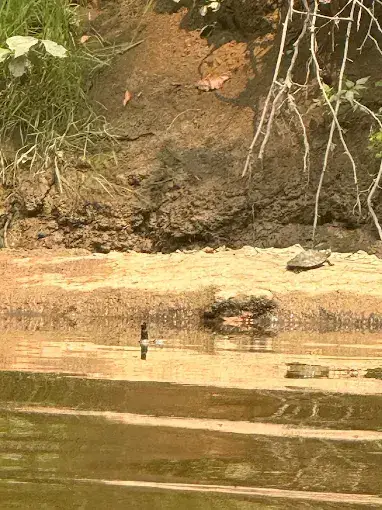
Turtles are the other reliable sighting on any Hocking River float. On warm days, you will spot them stacked two and three high on fallen logs and exposed rocks, soaking up the sun. The most common species here are painted turtles, with their bright yellow and red shell markings, and midland smooth softshell turtles, which look like flat, leathery pancakes.
Map turtles and snapping turtles also live in the river, though snappers tend to stay submerged and out of sight. If you are paddling a calm stretch and the water is clear, look down — you might catch a snapper cruising the bottom.
A quiet approach helps. Turtles are skittish and will slip off their basking spots the moment they feel vibration. Glide in with your paddle resting and you will get a much longer look.
Bald Eagles, Red-Tailed Hawks, and Other Raptors
Bald eagles have made a strong comeback along Ohio’s rivers, and the Hocking River is no exception. Active bald eagle nests have been documented near the river corridor, typically in tall sycamore trees with a clear sightline to the water. You are most likely to spot one soaring high above the canopy or perched on a dead limb scanning the river for fish.
Spotting a bald eagle from a canoe is one of those moments that makes an entire trip. Adults are easy to identify — dark brown body, bright white head and tail, and a wingspan that can reach seven feet. Younger eagles are trickier: they are mottled brown all over and do not get their white head until they are four or five years old.
Red-tailed hawks are common too. You will hear their distinctive, high-pitched scream echoing across the water, especially near open stretches where the tree canopy breaks.
Deer, Turkeys, and Songbirds in the Forest
White-tailed deer are the most common large mammal in the region, and they regularly come down to the river to drink. Early morning and late afternoon are the best times to spot them, though you can see deer along the banks at any hour. They are so common in this part of Ohio that you have a solid chance of spotting at least one during your trip.
Stay quiet and let the current carry you, and you may float past a doe and her fawns standing knee-deep at the water’s edge.
Wild turkeys are another regular sight along the Hocking River, especially where the woods open up near the banks. These big, dark, ground-dwelling birds scratch through the leaf litter looking for food. In spring, male turkeys fan their tail feathers in a display that is hard to miss.
The forests here are rich with songbirds. Ohio’s state bird, the northern cardinal, sings year-round and is one of the easiest to identify by sound. During spring and summer, migratory warblers, vireos, and thrushes fill the canopy. Birders visit the area near Hocking Hills State Park specifically for species like the blue-headed vireo and the hermit thrush. Both favor the deep, hemlock-shaded gorges nearby. Pileated woodpeckers — the big ones with the bright red crest — drum loudly on mature hardwoods and are a highlight for anyone paying attention.
A Wildlife Guide to What Lives Below the Surface
The Hocking River is healthier than most people realize. A study by the Ohio Environmental Protection Agency found that the river supports 75 species of fish and nearly 400 species of macroinvertebrates, earning parts of the watershed an “exceptional habitat” designation. Channel catfish and smallmouth bass are among the species that thrive in the river’s varied habitat.
You probably will not identify individual fish from your canoe, but you will notice the signs of a thriving aquatic ecosystem. Crayfish scuttle across the sandy bottom in shallow stretches. Minnows dart away from your paddle. On quiet mornings, you might see a smallmouth bass rise for an insect on the surface.
That biodiversity is part of why the river feels so alive when you are on it. It is a functioning ecosystem that happens to be a fantastic place to spend a day.
Tips for Spotting Wildlife on the Hocking River
Getting on the river is the first step. Here are a few things that will help you see more:
- Go early. The first bus to the launch site gets you on the water when animals are most active. Morning light is also the best for spotting birds and deer along the banks.
- Keep it quiet. Avoid loud music and splashing. The quieter you are, the closer you will get to wildlife before it notices you.
- Bring binoculars. A compact pair fits easily in a dry bag and makes a huge difference for watching birds and identifying distant raptors.
- Look up and look down. Eagles and hawks soar above the tree line. Turtles and crayfish hang out at water level. Fish are below the surface. The wildlife is everywhere — you just have to look in the right places.
- Float the calm stretches. When the current slows down, stop paddling and drift. These are the moments when you catch the best sightings.
- Leave no trace. Pack out everything you bring in. The reason the Hocking River supports this much wildlife is because the habitat is in good shape — help keep it that way.
Float Through One of Southeast Ohio’s Richest Ecosystems
A day on the Hocking River with Hocking Hills Canoe Livery is a paddle trip and a nature excursion rolled into one. Whether you choose a canoe, kayak, or tube, you will float through habitat that supports bald eagles, painted turtles, and 75 species of fish.
Hocking Hills Canoe Livery is located at 12789 State Route 664 in Logan, Ohio, and has been putting families, friends, and groups on the Hocking River since 1996. The river runs calm and gentle — no rapids, no whitewater — which means you can actually pay attention to what is happening around you instead of worrying about the water.
Bring a camera, pack a pair of binoculars, and keep your eyes open. The wildlife on the Hocking River does not disappoint.
See the eagles, herons, and turtles up close — visit hockingriver.com to pick your trip and reserve your spot on the river.